¶ 1.About this Manual
Welcome to your Revopoint 3D scanner user manual! This manual provides INSPIRE 2 operation guide and instructions. Please read the manual before your first use to ensure you use this scanner correctly and safely. If needed, you can click on any topic in the navigation bar to quickly jump to that section.
Manual Download
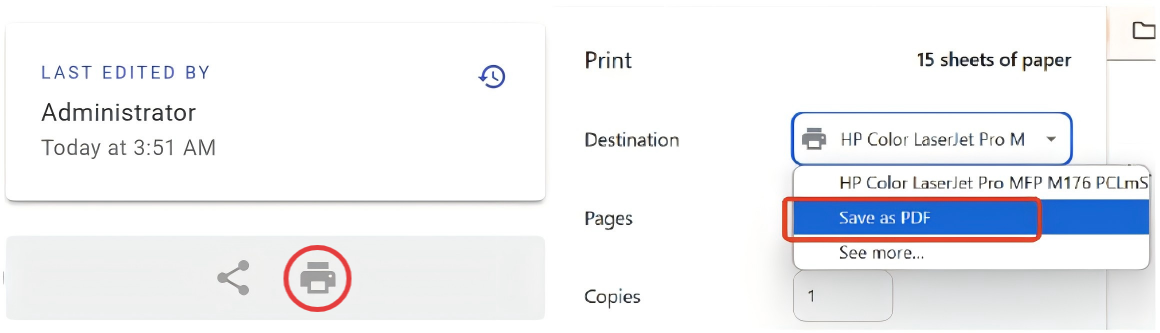
If you need a PDF manual, click the Print Format button at the bottom of the navigation bar on the left side of the manual, and select "Save as PDF" from the options.
¶ 2.About Product
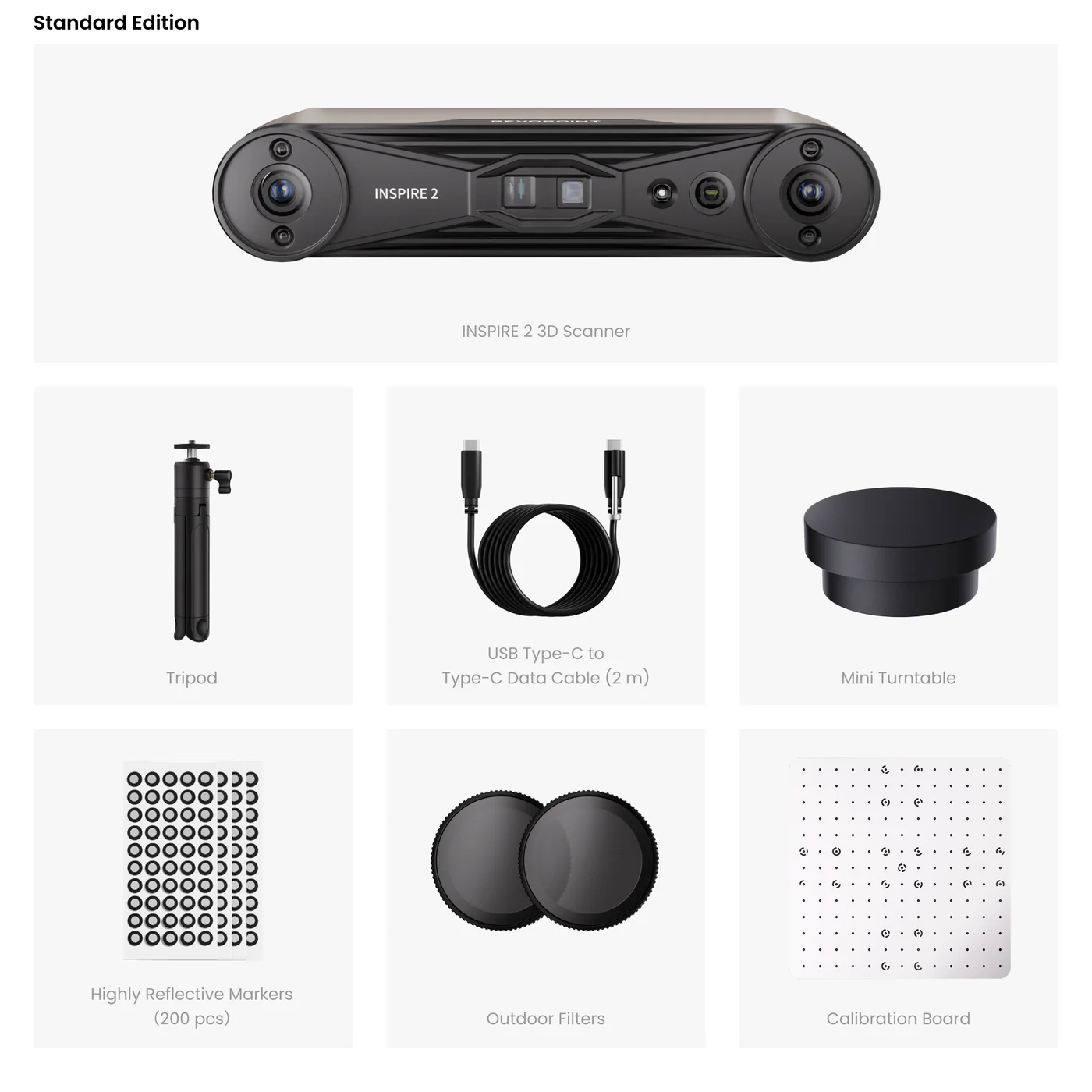
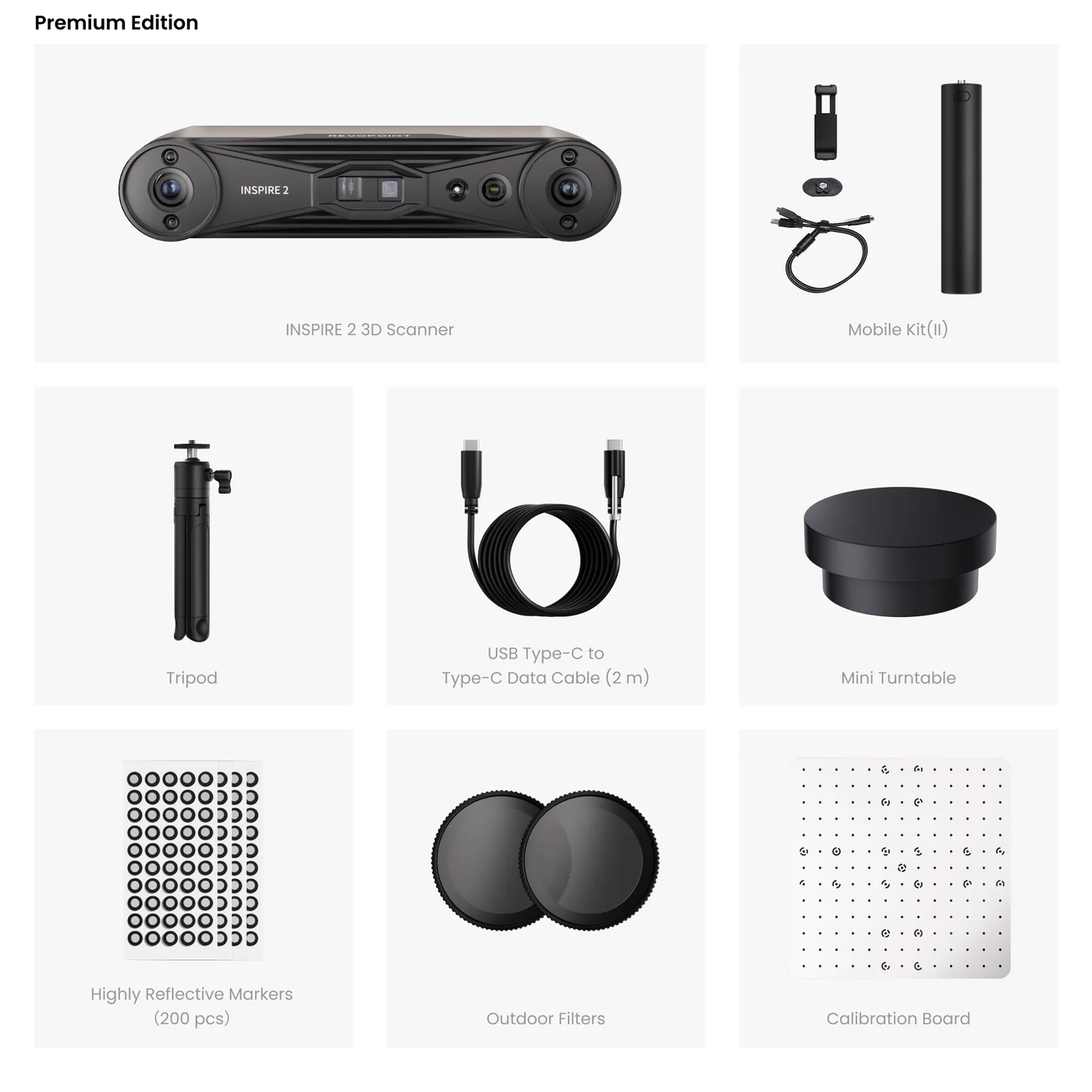
¶ 2.1 What's in the Box
※ It is recommended to use the official accessories provided in the package; otherwise, it may cause damage to the equipment.
¶ 2.2 Product Profile
¶ 3.Software Download and Usage
INSPIRE 2 must be used with the Revo Scan 6 (PC) or Revo Scan 6 (Phone) software. Before use, please visit the official website to download and install Revo Scan 6.
|
Software |
Revo Metro (PC) |
Revo Scan (Phone) |
|
Official Download |
Support - Download |
|
|
Supported Scanning Modes |
Full Field / Parallel Line |
Full Field |
INSPIRE 2 adds support for Revo Scan 6 in addition to the existing Revo Metro software. Both software applications provide the same core scanning and post-processing capabilities, while Revo Scan 6 additionally supports 3DGS and AI Segmentation, as well as GPU acceleration for AMD and Mac systems in Laser Line Scan mode.We recommend using Revo Scan 6 for scanning with INSPIRE 2.
For detailed information on the software’s features and operations, please refer to the Revo Metro Software User Manual/ Revo Scan 6 Software User Manual.
¶ 4.Scanner Connection
¶ 4.1 Connecting INSPIRE 2 to a PC
To ensure the scanning effect, please connect the scanner directly to the PC and avoid using the docking station.
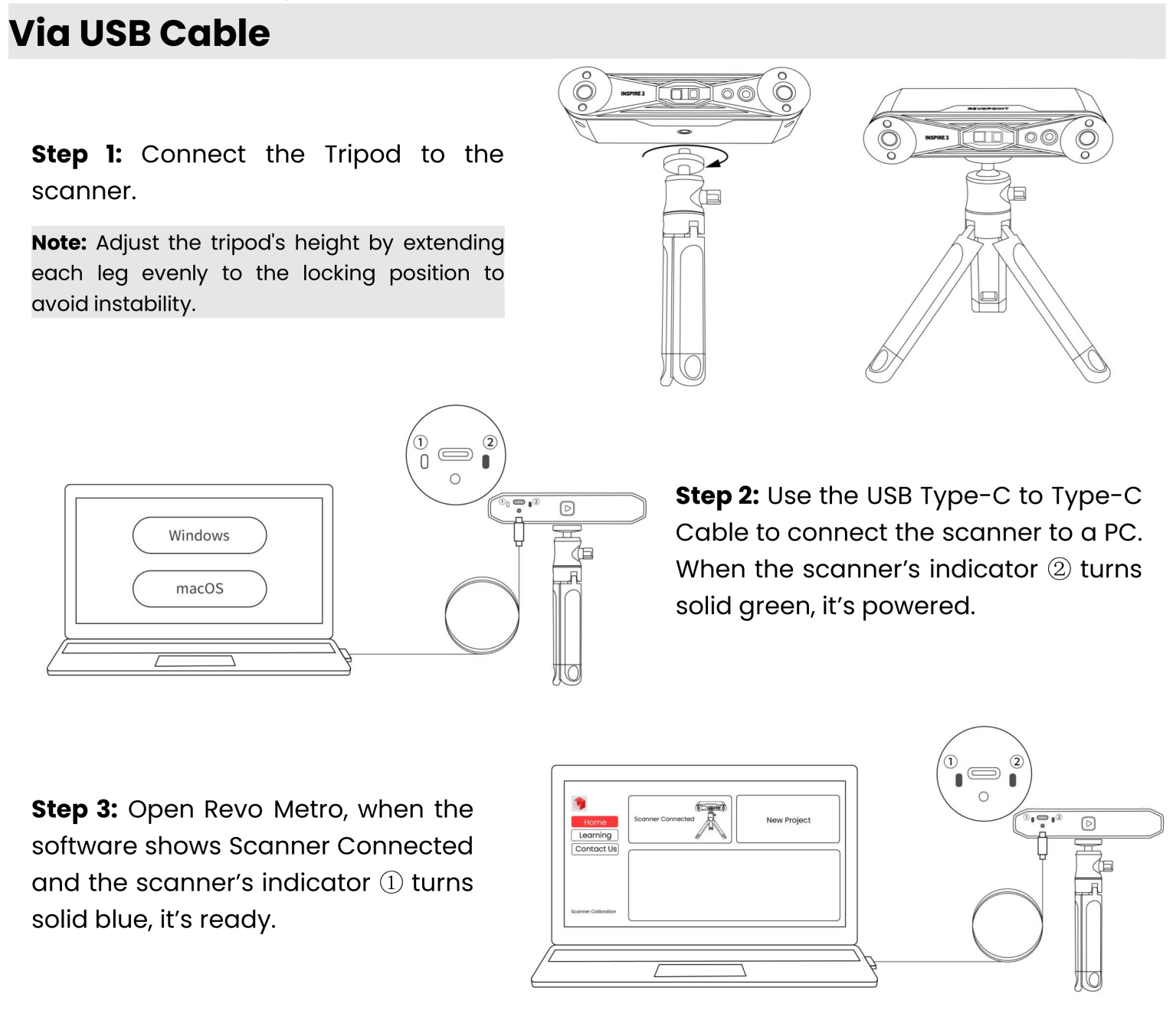
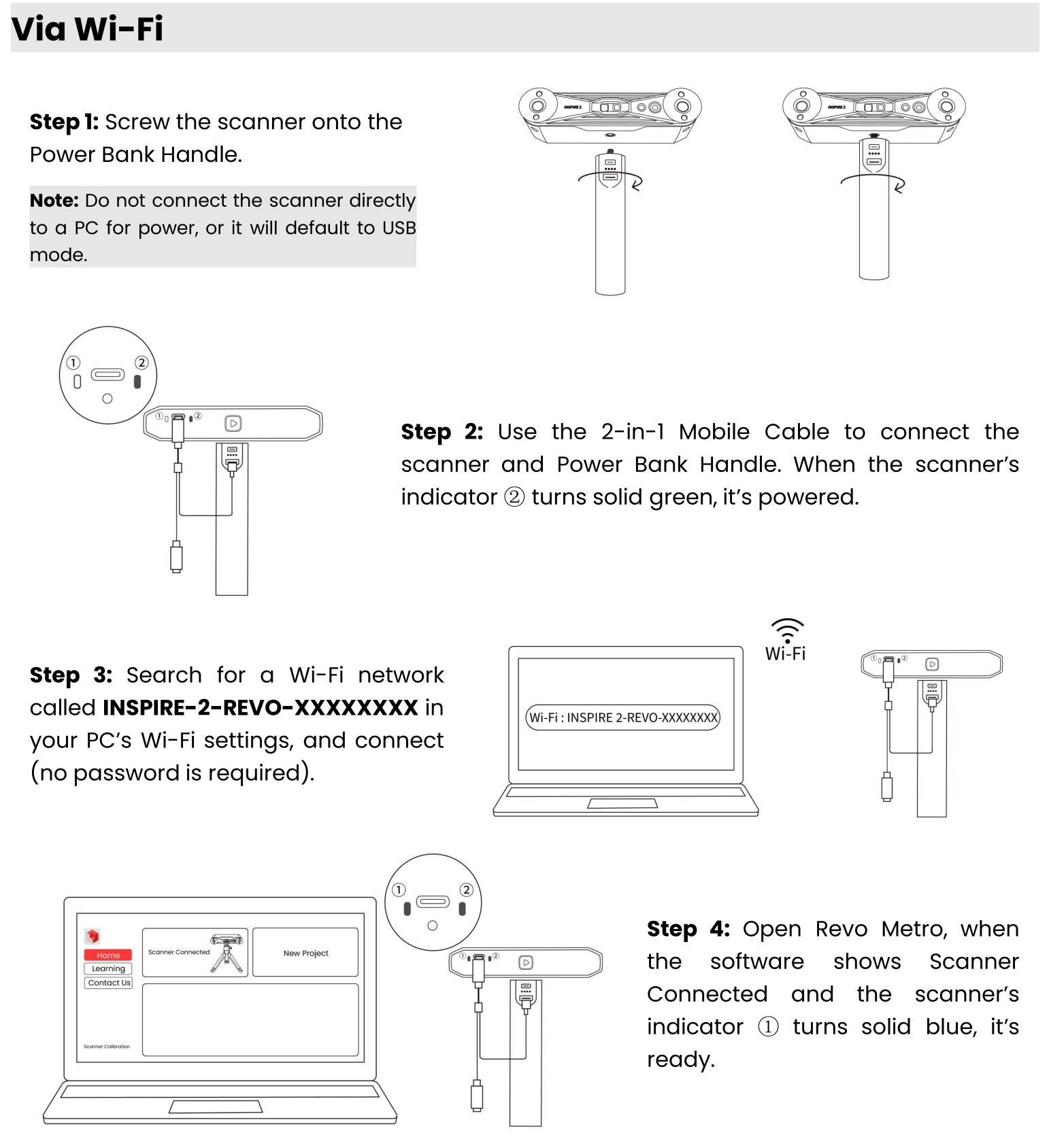
¶ 4.2 Connecting INSPIRE 2 to a Phone
.png)
.png)
Supported on PC and mirrored to a smartphone via Revo Mirror for preview and control.
① Visit the Revopoint official website and go to “Support - Download” menu to download and install Revo Mirror for both desktop and mobile.
② Mount the Mobile Kit (Phone Holder, Power Bank handle, Quick Release Plate) onto the scanner. Connect the Power Bank Handle to the scanner with the 2-in-1 Mobile cable.
③ Ensure both the computer and phone are connected to the network named “INSPIRE 2-REVO-XXXXXXXX.” Open the scanning software, wait for the scanner to connect and enter the scanning page, then click the mirroring button.
④ Tap the detected device to be mirrored in the mobile Revo Mirror app.
⑤ Follow the prompt on the PC to enter the PIN code to complete the initial pairing. Then, click “Enter Screen Mirror Mode” to control the scanning process.
For detailed instructions on the software and screen casting, please refer to the Revo Mirror User Manual.
¶ 5. Scanner Calibration
¶ Preparation
① Connect the Scanner to the computer using a USB data cable, then open Revo Metro on the PC.
② Place the Calibration Board and Click “Calibration” in Revo Metro.
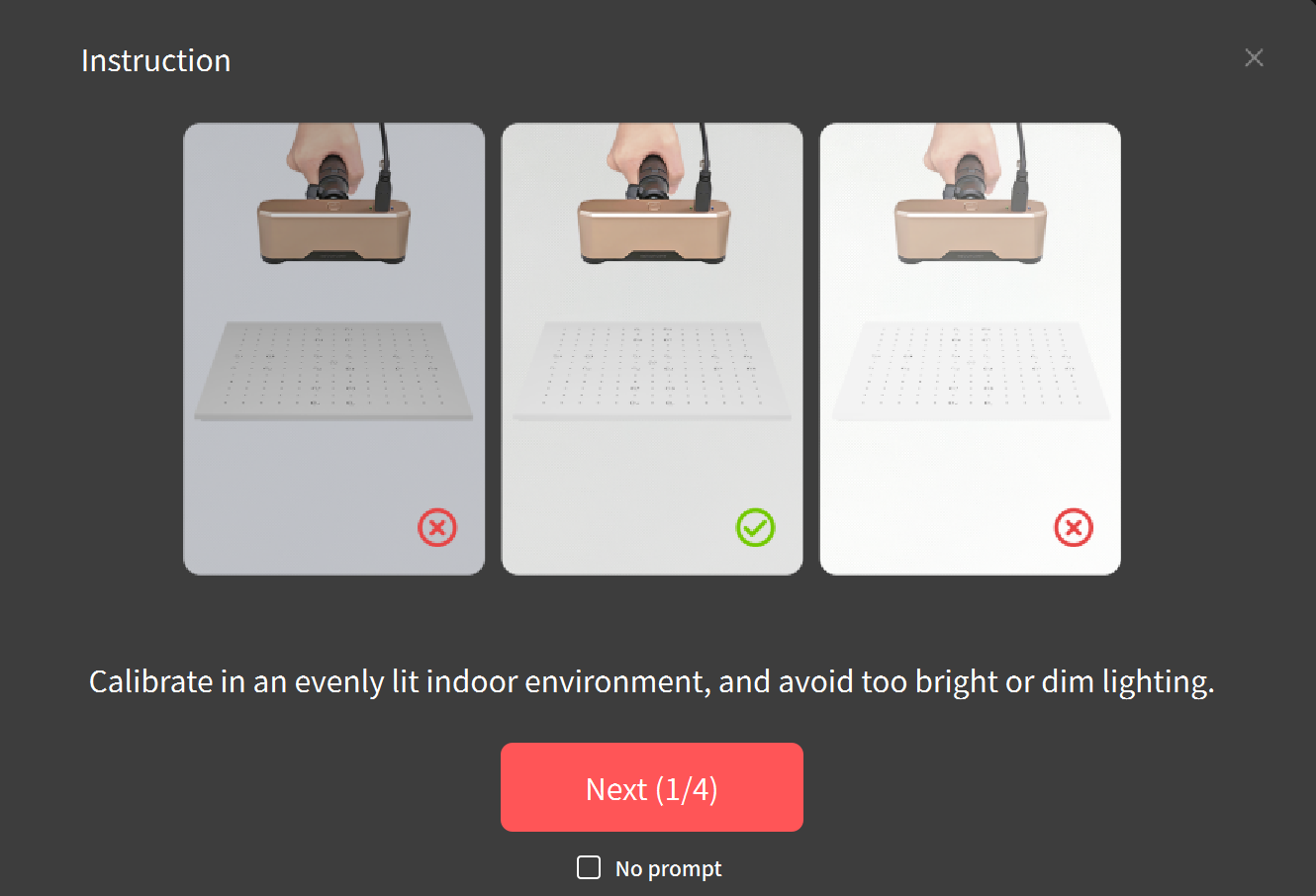
③ Create an evenly lit environment. Avoid too bright or dim lighting.
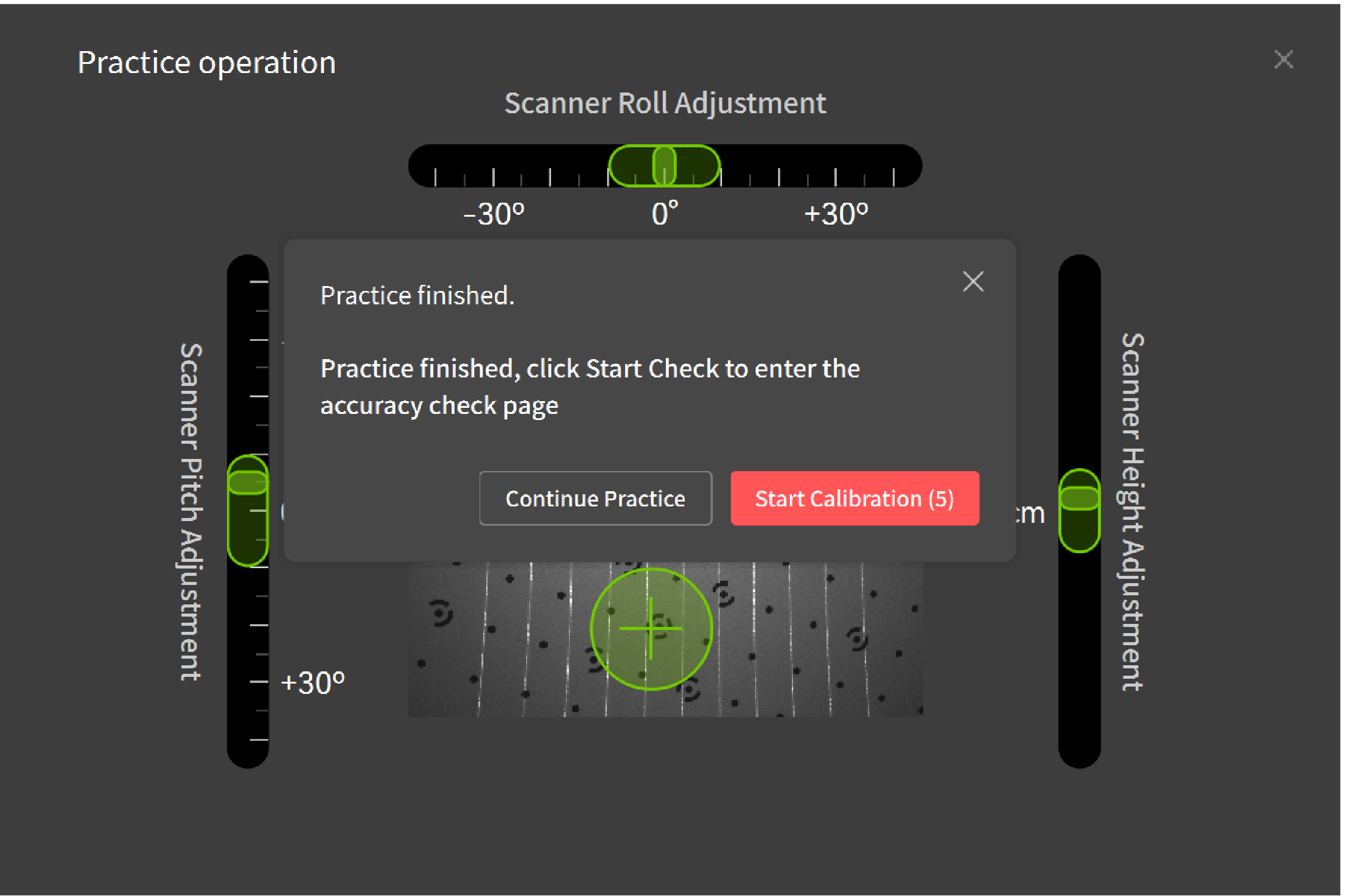
④ Follow the instructions to practice.
⑤ You’ll enter the accuracy check page after the practice and decide whether to calibrate the scanner according to the prompt.
¶ Start Calibration
① Follow the instructions on the left to adjust the scanner’s pitch, roll, and height. Follow the progress bar to collect data from the horizontal, left, right, front, and back.
② Follow the progress bar above to complete the calibration data collection step by step.
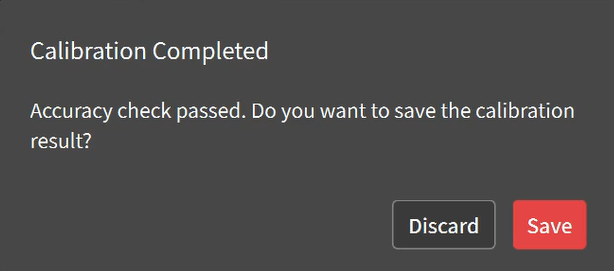
③ Save the calibration result when accuracy check passed.
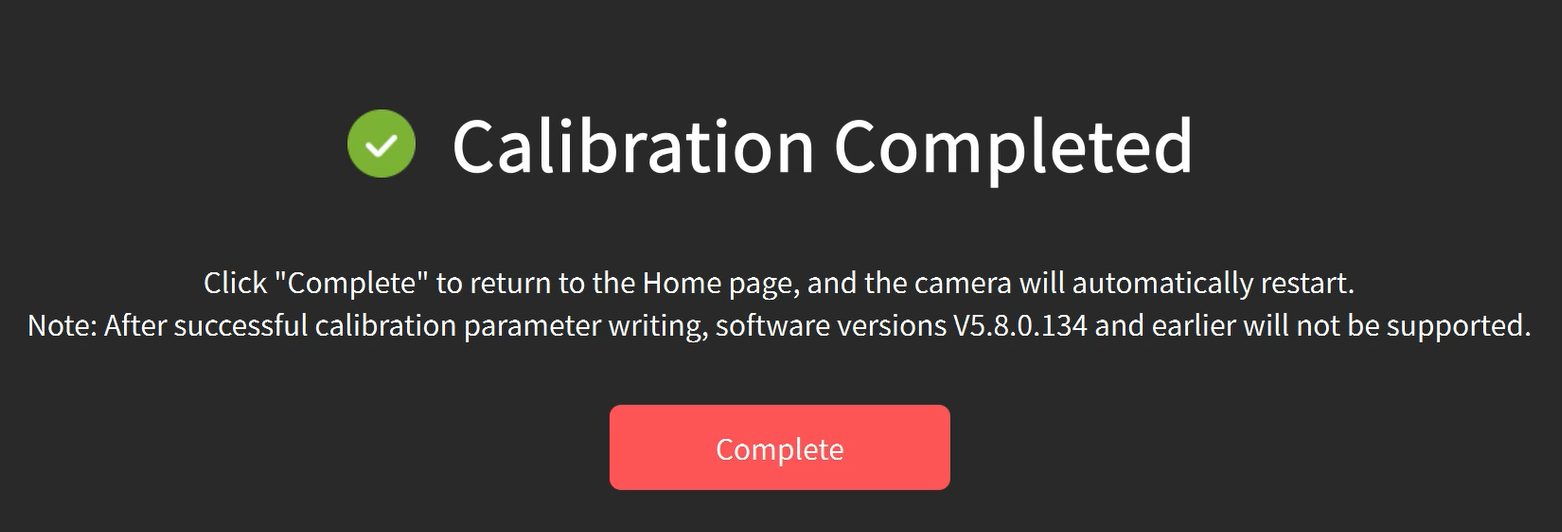
④ Click Complete to return to the homepage, and the scanner will reboot.
¶ 6. First Scan
INSPIRE 2 offers two scanning modes, as explained below.
Full Field: High scanning speed for rapid point cloud capture of common objects, supported on PC and mobile apps.
Parallel Lines: Designed for precision scanning, it handles reflective metal and black objects without spray coating. Supported on PC and mirrored to a smartphone via Revo Mirror for preview and control.
¶ Full Field
¶ Start Scan
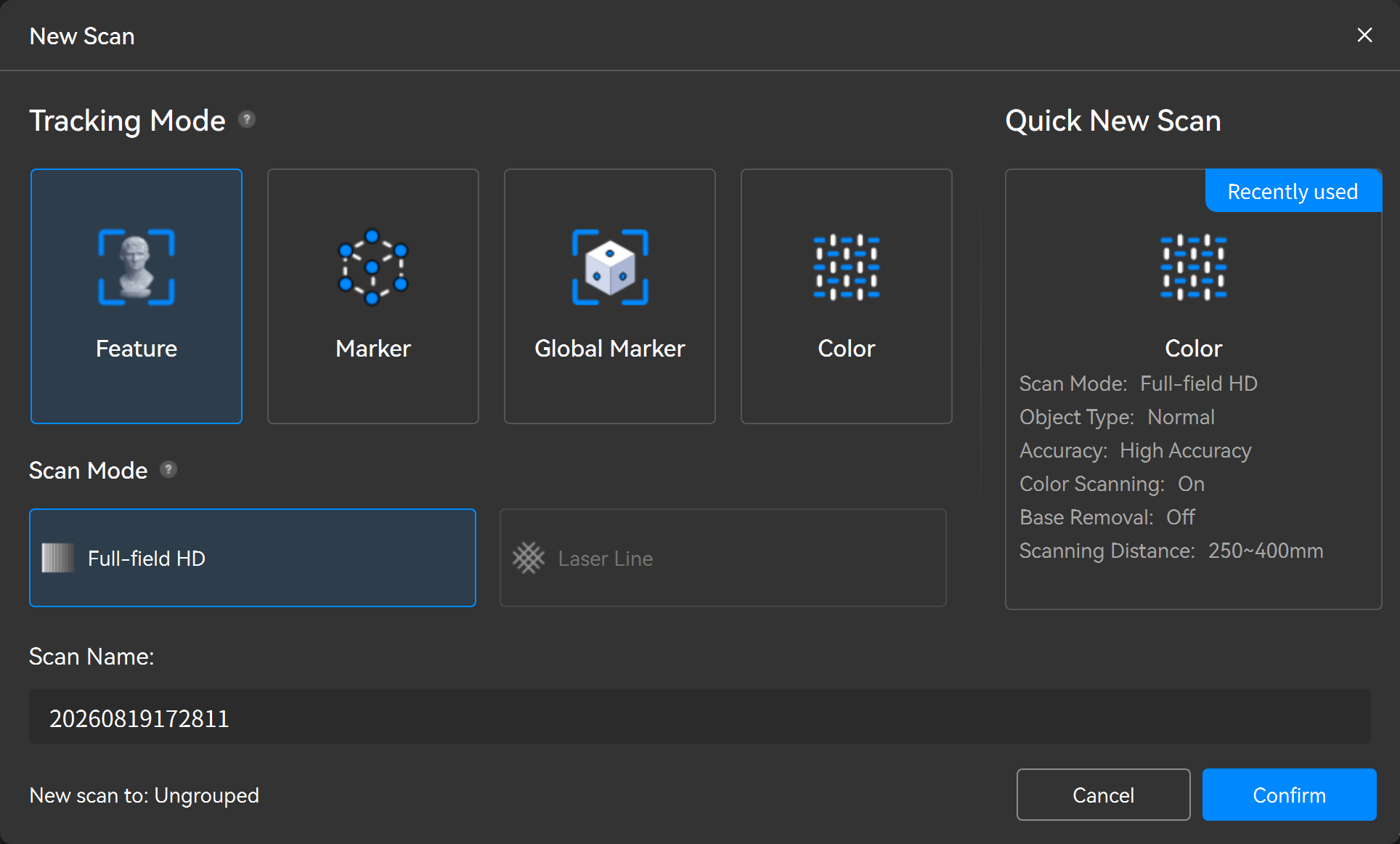
Click "New Scan" on the File page.
① For tracking Mode, you can select Feature. Select Full-field HD for scan mode.
② Name the scan file, then click "Confirm" to enter the scanning interface.
¶ Scan Settings&Scan Control
① The scan accuracy is set to "High Accuracy" by default, and the scanning object is selected as "Normal."
② Use the preview window on the left to make sure the object is inside the camera view.
③ Adjust the distance between the scanner and the object, ensuring the distance indicator bar shows green.
④ Adjust depth camera exposure so red and blue areas are minimized. Gray indicates the best setting.
⑤ Enable Color Scanning if color model is needed.
⑥ Once settings are ready, click "Scan."
⑦ You can pause anytime and check the scanning progress in the model display area. If the scan is incomplete, click "Scan" again to continue.
¶ Finish Scan
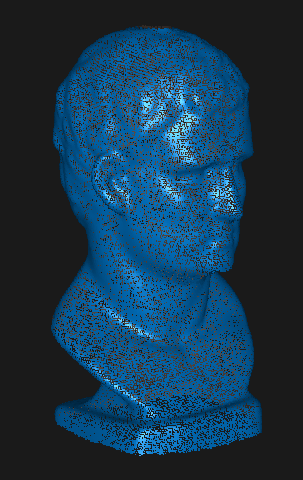
You can refer to the following criteria to determine if scanning is complete:
• If the model preview displays fully.
• Ensure the real-time preview covers all surfaces of the target object, especially undersides, backsides, and crevices.
• Pause scanning to check for unfilled areas or structural omissions in point cloud or preview models. (Small holes can be manually filled during post-processing.)
Click "Finish" to complete the scan. If the model is incomplete, click the "Scan" button to continue scanning.
¶ Parallel Lines Scan
¶ Preparation Before Scanning
Handle the Object
- Markers are required if you choose Laser Line scanning mode.
Don't use too many markers and ensure that at least 5 markers are placed irregularly per scanned frame.
For best accuracy, attach the markers to flat surfaces rather than curved ones. Also, please avoid using soft pads or cloths with markers.
You can also use the Marker Block Kit to create a more ideal and complete scanning environment.
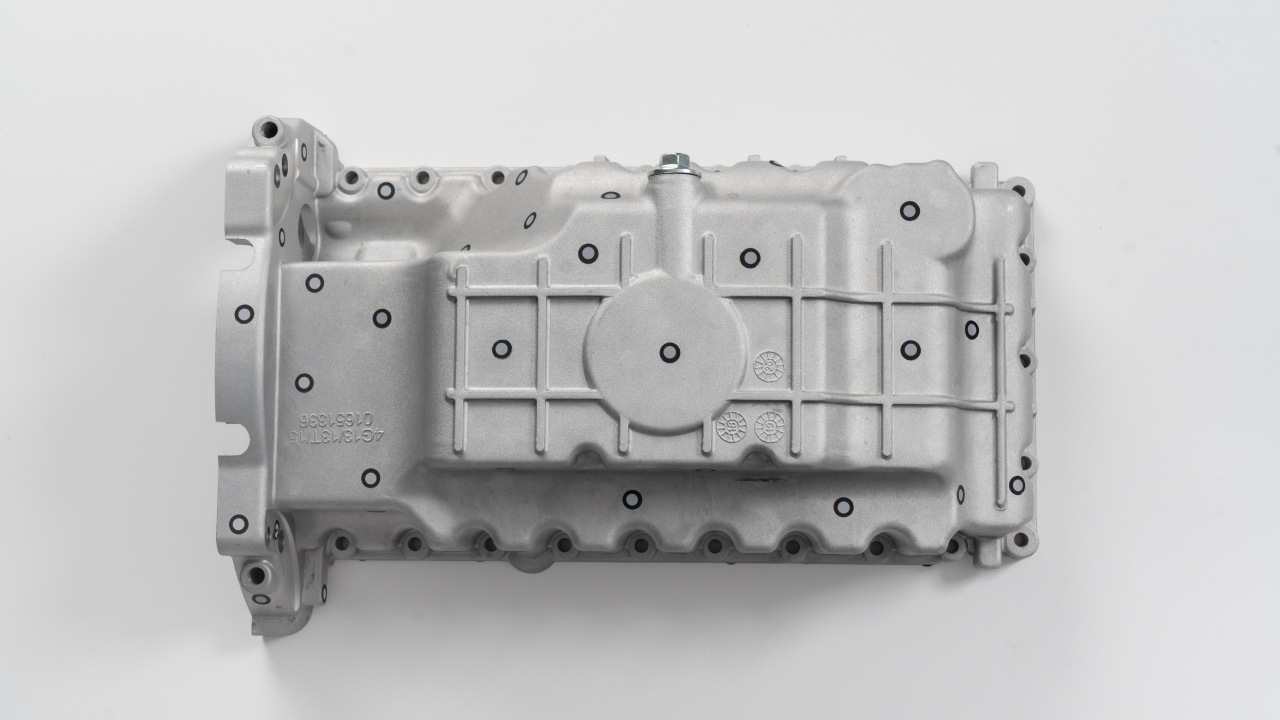
Marker Block Kit Quick Start Guide
- Using Scanning Spray
For transparent or specular objects (e.g., glass, stainless steel, electroplated surfaces), both line laser and structured light scanning require scanning spray.
For dark reflective or metallic reflective surfaces (e.g., black paint, machined aluminum alloy), line laser scanning can be performed without spray.
Note: Scanning spray can be purchased from Revopoint's online stores.
For detailed object processing instructions such as how to use markers, please refer toScanning Tips--Handle objects Before Scan
¶ Create a New Scan
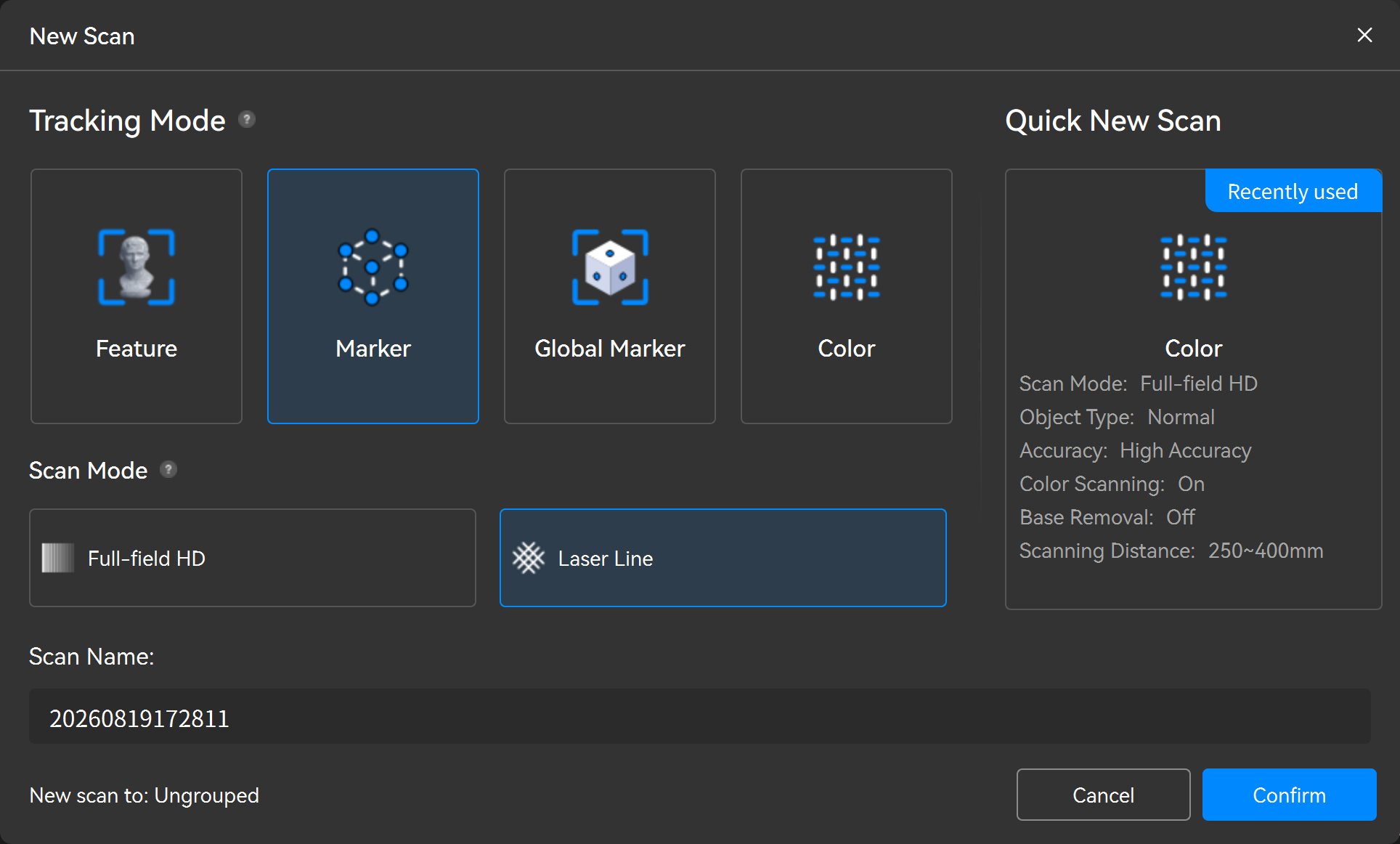
Click "New Scan" on the File page.
① Select"Marker" or "Global Marker". Select"Laser Line"in scan mode.
② Name the scan file, then click "Confirm" to enter the scanning interface.
¶ Scan Settings & Scan Control
① Set Accuracy and Object Type.
② Set the target point distance. Larger spacing scans faster, while smaller spacing gives finer detail.
③ Adjust the distance between the scanner and the object, ensuring the distance indicator bar shows green.
④ Adjust the exposure of the depth camera to ensure that the laser line is clearly visible in the depth camera preview window.
⑤ Once settings are ready, click "Scan."
⑥ You can pause anytime and check the scanning progress in the model display area. If the scan is incomplete, click "Scan" again to continue.
¶ Finish Scan
You can refer to the following criteria to determine if scanning is complete:
• If the model preview displays fully.
• Ensure the real-time preview covers all surfaces of the target object, especially undersides, backsides, and crevices.
• Pause scanning to check for unfilled areas or structural omissions in point cloud or preview models. (Small holes can be manually filled during post-processing.)
-incomplete.png)
Click "Finish" to complete the scan. If the model is incomplete, click the "Scan" button to continue scanning.
Optimal results require proper parameter settings, which affect model integrity, clarity, and post-processing efficiency. Refer to Scanning Parameters Settings in Revo Scan 6's user manual for guidance on detailed settings.
¶ Full Field Scan
To help you get familiar with the scanning process, this section demonstrates a complete example of scanning a sample bust in Full Field mode. Beginners can follow the steps below to practice in real time.
¶ Start Scan
¶ Create New Project
Click “New Project” on the software home page. Name the file, choose the location to store the file (or use the default location), click “New,” and enter the scanning interface.

¶ Scan Settings
① Select “Feature Scan”.
② Select “Full Field” in Scan Mode.
③ Select “High Accuracy” > “General” in Scan Settings.
④ View the model’s position through the camera preview window on the left, and ensure the model is within the camera’s field of view.
⑤ Adjust the distance between the scanner and the sample bust to ensure that the color on the distance indicator bar is displayed in green.
⑥ Adjust the Depth Camera exposure until the object surface in the preview window appears mostly gray, with minimal red or blue areas.
¶ Scanning Controls
① After setting the above parameters, click the "Start" button to begin the scanning.
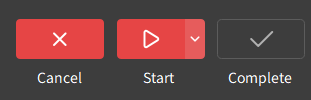
② During scanning, pause to review progress in the model display area. If the model appears incomplete (as shown in the example), click "Start" again to continue.
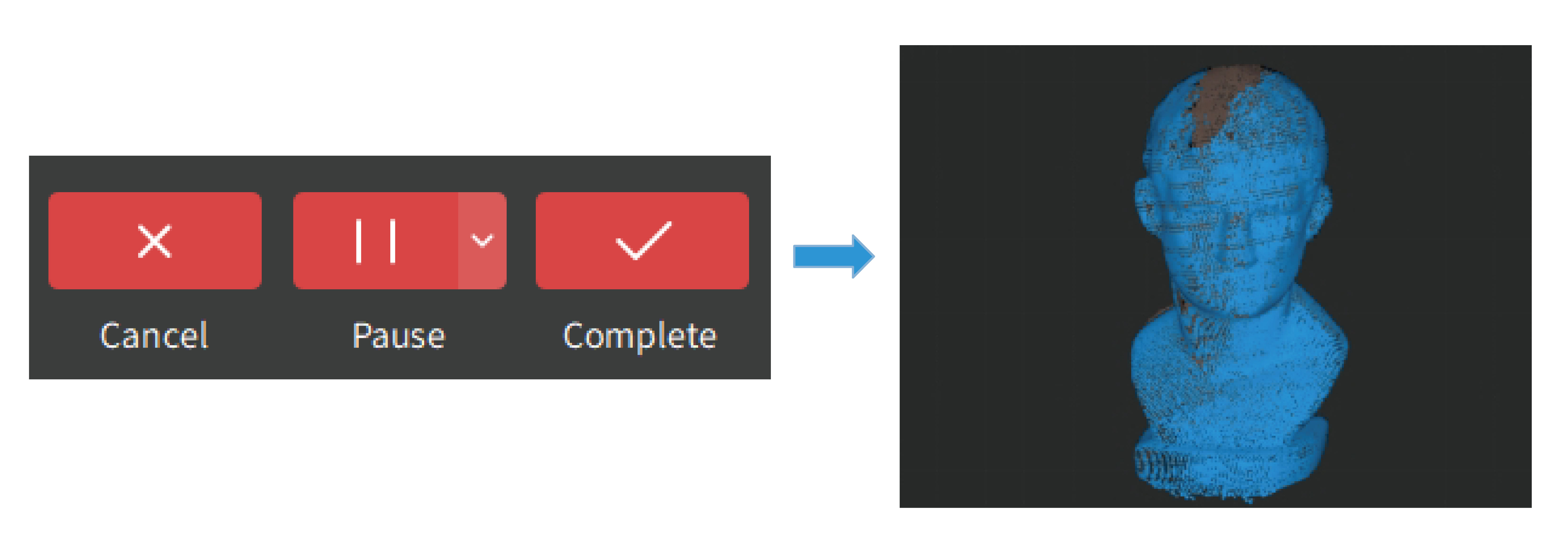
③ Once the model’s surface data has been fully captured, click “Complete” to complete the scan.

¶ Model Editing
In the model editing area, click “One-click Editing” > “Apply” to automatically complete model editing.

¶ Model Export
Click "Export" and select the formats to export.

¶ Parallel Lines Scan
To help you get familiar with the scanning process, this section demonstrates a complete example of scanning a small metal part in Parallel Lines mode. Beginners can follow the steps below to practice in real time.
¶ Create New Scan
Click “New Project” on the software home page. Name the file, choose the location to store the file (or use the default location), click “New,” and enter the scanning interface.
¶ Scan Settings
① Select “Marker Scan”.
② Select “Parallel Lines” in Scan Mode.
③ Select “Marker Tracking” in Tracking Mode and “Metallic Shinny Object” in Object Type.
④ Select the inner diameter of the markers currently in use to enhance the scanning accuracy.
⑤ Set the Target Point Distance.
Note: Increasing point distance speeds up scanning, decreasing it enhances details but slows the process.
⑥ Adjust the distance between the scanner and the metal part to ensure that the color on the distance indicator bar is displayed in green.
⑦ Adjust the exposure of the depth camera to ensure the laser lines are clearly visible in its preview window.
¶ Scanning Controls
① After setting the above parameters, click the "Start" button to begin the scanning.
② During scanning, pause to review progress in the model display area. If the model appears incomplete, click "Start" again to continue.
③ Once the model’s surface data has been fully captured, click “Complete” to complete the scan.
¶ Model Editing
In the model editing area, click “One-click Editing” > “Apply” to automatically complete model editing.
For detailed specific functions and operations for model editing, click Revo Metro Model Editing to learn more.
¶ Model Export
Click "Export" and select the formats to export.
¶ Outdoor Scanning Tips
When scanning outdoors, set "Object Type" to "Outdoor Object" in the scan settings.

- Attach the two outdoor filters onto the front of the left and right depth cameras before outdoor scanning with structured light.
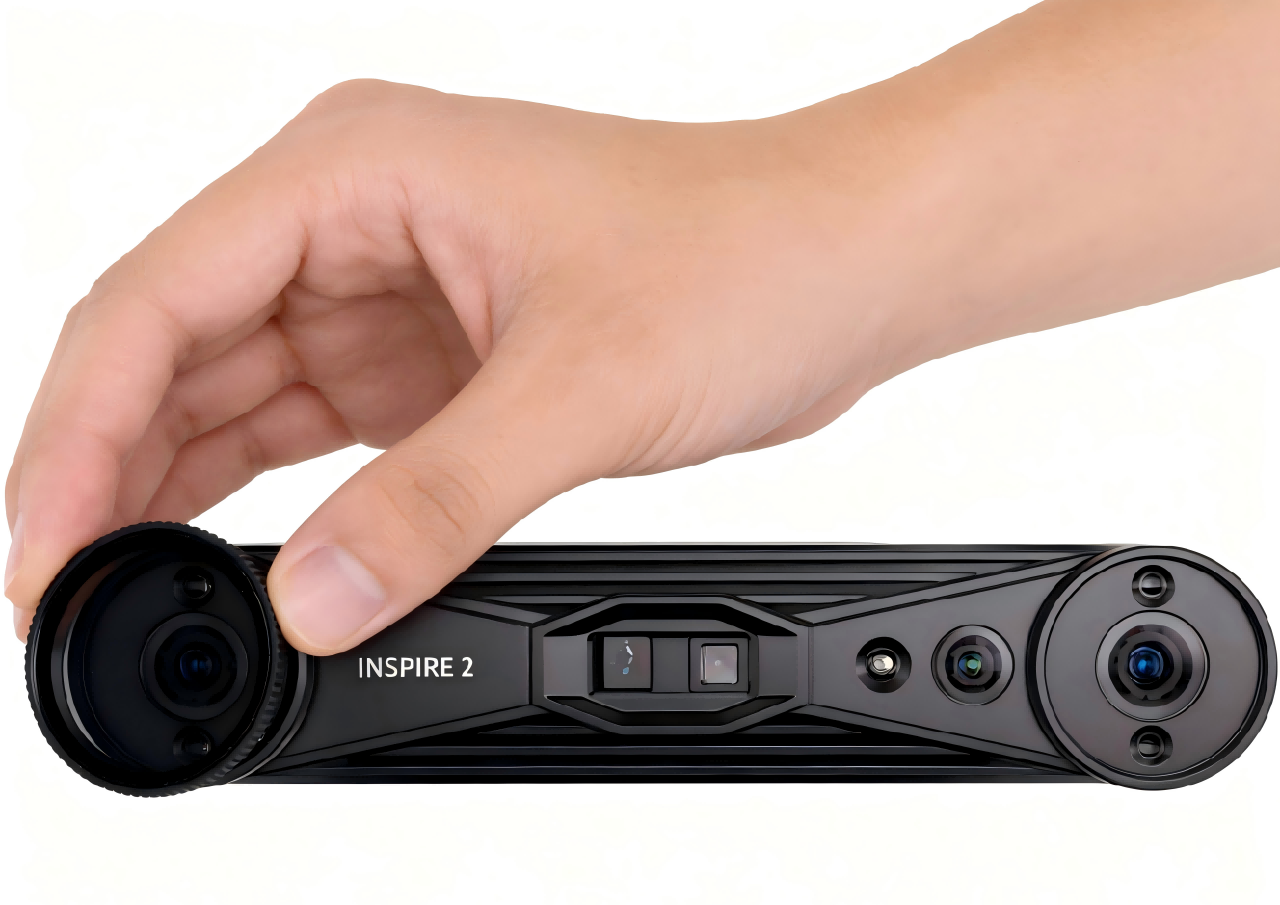
Note: When using Parallel Lines mode for outdoor scanning, do not install the outdoor filters.
- When scanning outdoors, avoid direct sunlight to minimize interference from reflective surfaces.
- Avoid scanning in rainy or windy weather to prevent water damage or reduced data accuracy from wet surfaces.
¶ 7. Model Processing and Advanced Functions
¶ 7.1 One-click Edit
¶ 7.2 Manual Processing
This mode offers greater flexibility and is suitable for users who have higher requirements for model quality. Available functions include: Point Cloud, Mesh, Texture, Alignmentand Key Frames Edit, click the link to view the detailed introduction.
¶ 7.3 AI Object Segmentation and Tracking Function
Object Segmentation: Uses AI object recognition and tracking technology. After selecting the target object region, the software can continuously track that region during scanning, automatically remove irrelevant environmental point clouds, and output independent object point cloud data. For details, see:Revo Scan 6 Software User Manual - Object Segmentation
Remove Background: Uses AI background recognition and filtering technology. After selecting the background area to be removed, the software can continuously ignore that area during scanning and automatically retain the target object's point cloud. For details, see:Revo Scan 6 Software User Manual - Remove Background
¶ 7.4 3DGS Real Modeling Function
3DGS:Using scaled Gaussian splatter 3D modeling reconstruction, the point cloud and RGB scan data are converted into a realistic Gaussian model, enhancing realism while maintaining accuracy. This feature is available only after meshing has been completed.
Revo Scan 6 Software User Manual - 3DGS